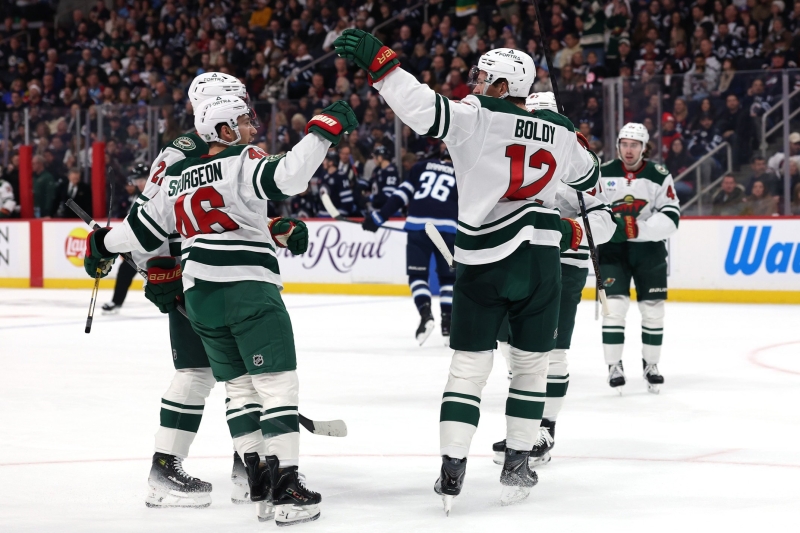
Playing team sports can be a great way for kids to develop lifelong skills like teamwork, dependability, and perseverance. Team sports can also be a hotbed of inner drama and competition, hierarchical cliques, and harassment. Pointing kids toward the workings of a team like the Minnesota Wild could be a great way to foster the more positive aspects of a team.
Why Is A Good Locker Room Important?
There are always fans who will scoff at the concept that having a “good locker room” is important. These tend to be the same fans who view winning as the only acceptable outcome of every game and view the players as hockey robots who can’t have feelings or personal lives. What this sort of fan misses is the idea that sports are as much about pushing through adversity as they are about winning.
There will always be teams at the bottom of the league. In every game, one team will lose. There will be seasons filled with disappointment and seasons filled with excitement, and even a few seasons with a healthy mix of both.
But at the end of it all, what will motivate a player to keep his heart in the game instead of simply playing for a paycheck is making sure that the locker room is a good one. What does that mean? That means there isn’t any hazing or harassment. It means that while there may be some well-intentioned ribbing, no one is singled out for routine embarrassment. It means that even the youngest and newest players feel comfortable.
Having a good locker room shows up on the ice during the good times and holds the team together during the bad. Knowing that everyone is all in it together is something that money can’t buy.
Unconventional Leadership
Jared Spurgeon being the captain of the Wild is something that I could and should write an entire article about. An undersized player who was originally drafted in the sixth round by a team that didn’t end up signing him, he signed an entry-level contract with the Wild after they invited him to training camp as a free agent.
His first call-up to the NHL was almost written off as a mistake or a joke because of his small size. Spending his first few years with the Wild in a locker room that treated rookies like absolute garbage shaped Spurgeon’s views on leadership and what a team should look like.
When he was named the captain in January 2021, Spurgeon was vocal about making the Wild’s locker room a place where everyone felt comfortable. It helps that he’s a smaller-than-average NHL player. He’s a somewhat soft-spoken, paternal figure who can get his point across without being intimidating and without making a younger player feel less than.
Spurgeon’s soft, calm energy is balanced out well with Marcus Foligno’s loud, boisterous energy. Foligno is the outgoing, beauty-queen-type wife of the quiet accountant husband that Spurgeon represents. He can get the team and the crowd going and isn’t afraid to look a little dumb if it’s for the benefit of his team.
Remember the Moose Crossing commercial?
Iconic, even though he probably felt a little dumb submerging himself in the seaweed while wearing all of his hockey gear. Either way, Foligno and Spurgeon could “good cop, bad cop” all the way to the bank together.
Giving the second A to Kirill Kaprizov after Matt Dumba left was a no-brainer. While many would assume it’s simply because of his superstar status, there is more to it. He isn’t the kind of vapid superstar who steps on the ice and expects the world to clap.
Kaprizov is battling alongside his teammates every day on the ice, willing to step into board battles and scrums that other big names would simply skate by. He’s got the skills of a top-of-the-league point producer with the mentality of a fourth-line grinder who’s just trying to make sure his bills are paid. At the end of the day, Kaprizov didn’t just get the A for being the best player on the team. He got it because he raises everyone else every day.
Down, But Never Out
Maybe it’s a cliché, but the mark of a great team is that they may get down, but they’re never out. The Wild has had this mentality this season, which is why making a deeper run in the Cup seems more feasible than in previous years. Not only are they seemingly able to put losses behind them relatively quickly, but they’re even able to pick up the pace mid-game.
Now, that doesn’t mean they always win. Hey, everyone has an off day. But more often than not, when the Wild start off playing in a way that makes us cringe, they find their way back and at least make a push to the very end. Sure, there are still lopsided losses, but most of those have occurred while some of their most important players (ahem, Joel Eriksson Ek) were injured or only became lopsided because of empty-net goals at the very end.
Either way, watching the Wild come back from a 3-0 deficit against the Chicago Blackhawks to win last week is proof positive that they might be down, but never out.
One For All and All For One
All of these things are what I’m looking for when I put my own children in team sports. I want them to learn, through the magic of hockey, that ultimately, they need to be able to depend on other human beings while also being dependable to everyone around them.
It’s a life lesson I hope they carry far beyond the world of hockey and into their everyday lives as they grow up in an uncertain world. Hopefully, all of us hockey lovers can remember that life lesson as well, because we need it these days.