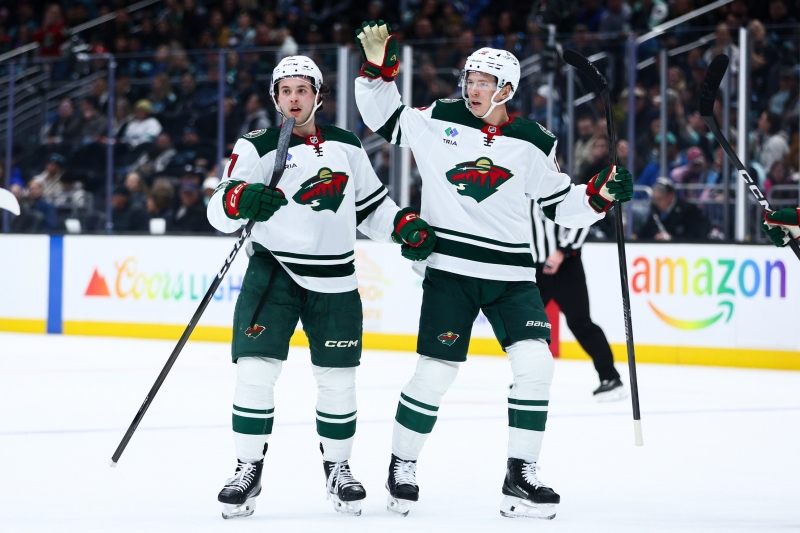
The Minnesota Wild are really good. It’s debatable exactly how good they are, but it’s all but certain they’ll make the playoffs. There are four games left to play (and an entire Olympic break) before the trade deadline, but the A-topic for the next month will be trade deadline strategy.
Most teams will be looking to bring in players on long-term deals signed before the announcement of cap increases through 2027-28. For cash-strapped contenders, it’s a cost-effective way to bring in cheap talent.
Minnesota doesn’t need to do this. Instead, they should go bargain-hunting for one-year rentals.
The term “rental” has a negative connotation, even in NHL circles. It sounds shortsighted. Why give up future assets for a player who’s only on the team for 20 games and the playoffs? That’s downright irresponsible! Isn’t it?
Let’s examine that idea first.
Why Do We Hate “Rentals?”
Americans do not like debt. Perhaps even more strongly, we detest the idea of renting.
Perhaps this is rooted in the Great Depression. There may be no single historical period more traumatic to the American psyche than that decade of economic hopelessness. Since trauma can be passed down for generations, it stands to reason that the Depression would skew our national consciousness for generations.
This hatred for debt and renting is especially prominent in the Midwest. These agrarian states were hit especially hard in the 1930’s, when about one-third of farmers lost their land via foreclosure.
Farmers began to organize “Penny Auctions” in response, in which they manipulated auctions on foreclosed farms to drive down the resale price. This helped the original owners affordably repurchase the farm, and it also diminished banks’ ability to recoup the value of the loan through collateral.
By American standards, this is an extremely powerful example of workers uniting to protect themselves from the interests of capital.
In other words, we may not have national healthcare, but we’ll be damned before we turn into a nation of borrowers and renters.
The Trade-Deadline “Rental” Label Is Misleading
It’s no surprise, then, that the idea of a trade deadline “rental” is repugnant to many fans. It offends our American identity and our Midwestern sensibility. But remember, that is rooted (at least according to my theory) in farm mortgages — debt on an asset, which increases in value over time.
NHL players are depreciating assets. They generally play worse as they age, and younger players generally become more expensive as they move from entry-level contracts to RFA status to unrestricted free agency.
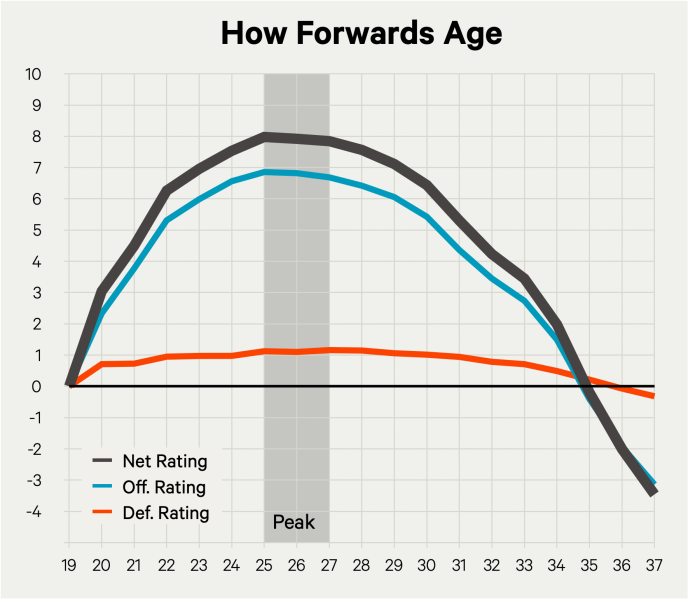
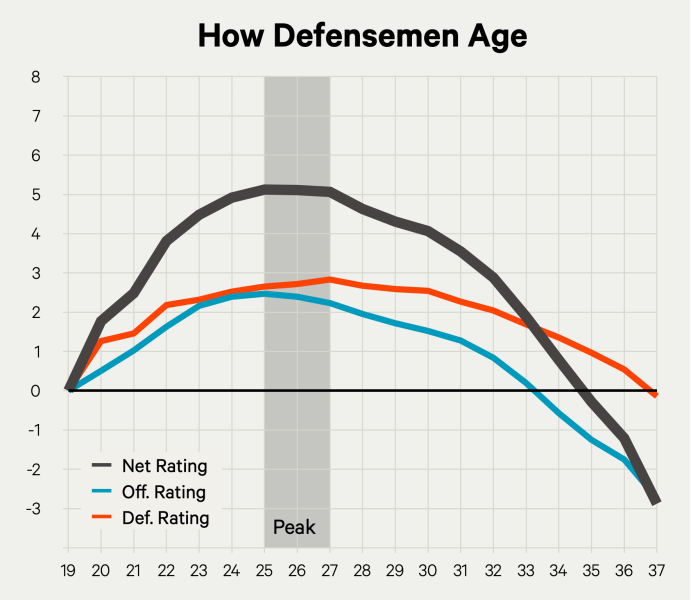
If a team makes a long-term investment in an NHL player, it doesn’t mean that they get to keep him afterwards. It just means they held onto a depreciating asset for a longer period.
So, stop thinking of NHL players as an investment. They’re much more like a car than stocks, real estate, or a house.
Instead, imagine NHL teams as car-rental services, and think of the players as inventory. Their purpose is to generate value for the team before they have too many miles on them. While a car rental service measures that value with “revenue,” NHL teams measure it in “goals” or “wins.”
The Wild’s Depth Problem
As it’s constructed, the Wild roster is entirely too thin. They have three superstars and a deep defense corps, but the forward group is not prepared for a playoff run. There is no first-line center, and the second line still features Marcus Johansson. Even when healthy, the bottom six includes more than one player who should be playing AHL minutes more often than not.
If you’re not convinced of that, please read this to get on the same page for the rest of my argument.
Looking purely at the 2025-26 Wild roster, it probably needs two forwards. One of those two needs to be able to play center, because any injury to Joel Eriksson Ek, Ryan Hartman, Danila Yurov, or Nico Sturm would put Ben Jones in the lineup.
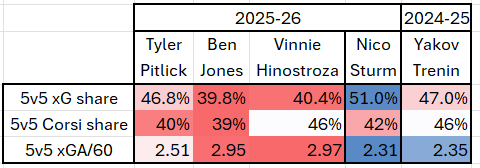
Most likely, this also makes Yurov difficult to part with at this trade deadline.
Which Assets Can Minnesota Part With?
So, Minnesota’s main concern is filling the roster for a run at the Stanley Cup this season. They don’t have a full arsenal of 2026 draft picks, but they could include prospects such as Charlie Stramel to bridge that gap.
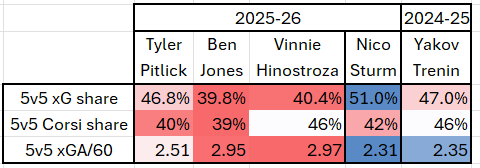
That makes the short-term rental strategy even more likely. While other contenders bid up trade prices for players on long-term contracts signed before news of the cap explosion, Minnesota can pick up the less desirable one-year rentals.
For other contenders, this could create an issue with their 2026-27 roster. The Wild have an impressive amount of salary cap flexibility. In 2026-27, they have $14.5 million of cap space to replace Vladimir Tarasenko, Mats Zuccarello, Marcus Johansson, Vinnie Hinostroza, and Zach Bogosian.
That may sound complicated, but both Daemon Hunt and David Jiricek are available to fill in the bottom pair. The price of two middle-six forwards (Zuccarello and Johansson) and a third-liner (Tarasenko) is probably more than what’s left. However, it’s close enough that the Wild can get to the playoffs and reload again at the 2027 trade deadline.
At that trade deadline, Minnesota should be better positioned to trade for more viable long-term assets. Their 2027 first-round pick will never be more valuable, and their 2028 draft picks won’t be the far-off thought that they are now.
For those concerned about covering the Quinn Hughes extension: The Wild have $48.4 million in 2027-28 cap space, when a Hughes extension would kick in. Projecting a $17 million cap hit for Hughes, and assuming all 2026 free agents are retained, that still leaves $16.9 million in cap space to replace or re-sign Jesper Wallstedt, Ryan Hartman, Nico Sturm, and Jared Spurgeon.
Navigating the trade deadline doesn’t often have one right answer. The stakes are high this year. Bill Guerin needs to nail this deadline to put the finishing touches on what could be a Stanley Cup contender.
In the face of adversity, humans often seek compromise and common ground. This is often a mistake; instead, those circumstances require a clear vision and the conviction to execute it.
Minnesota can’t half-measure its way to a Stanley Cup window. They need to address their forward depth at this deadline, even though they don’t hold a 2026 first-round pick. The best way to satisfy both conditions is to acquire one-year rentals and rely on their cap flexibility in the future.